Laptops are the biggest DSE risk in most small businesses
· 5 min read
The short answer
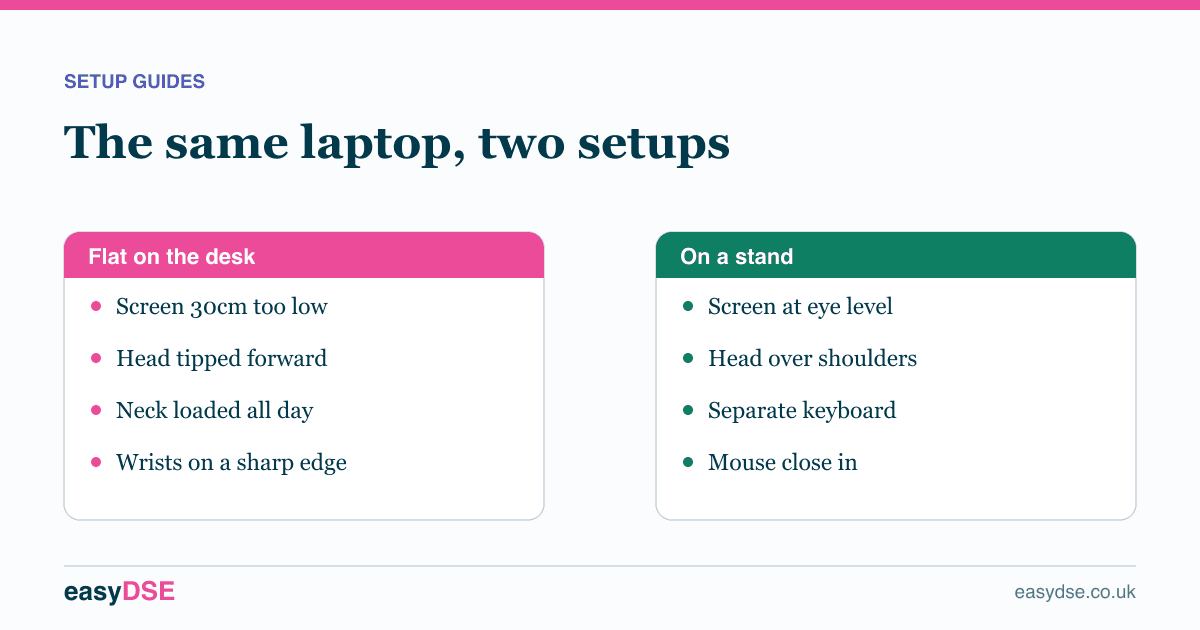
A laptop is a compromise by design: the screen and keyboard are fixed together, so one of them is always in the wrong place. Over four hours a day that shows up as neck and wrist symptoms. A stand plus a separate keyboard and mouse resolves it for under fifty pounds.
If you only fix one thing across your business, fix this one. Laptop working is the single most common high-severity finding in DSE assessments, and it is also among the cheapest to resolve.
Why a laptop cannot be set up correctly
Good screen position puts the top of the display at roughly eye level. Good keyboard position puts your hands at about elbow height. On a laptop those two things are bolted together about twenty centimetres apart, so you can have one or the other.
Put the laptop flat on a desk and the screen sits around thirty centimetres below eye level. Your head tips forward to meet it. The head weighs roughly five kilograms, and tilting it forward multiplies the load the neck carries. Hold that for six hours a day, five days a week.
The fix, and what it costs
| Item | Typical cost | What it solves |
|---|---|---|
| Laptop stand or riser | £25 to £60 | Screen to eye level |
| Separate keyboard | £20 to £40 | Hands back to elbow height |
| Separate mouse | £15 to £35 | Removes trackpad strain |
Under a hundred pounds a head, often well under. Compare that with the cost of one absence episode, let alone a claim.
Docking to a monitor
If someone has an external monitor, the laptop screen becomes a secondary display. Put the monitor directly in front at eye level and the laptop off to one side, raised so the two screens are roughly level. Do not leave the laptop open and low in front of you with the monitor off to the side, which is the worst of both.
Working away from a desk
Sofa, bed, train and kitchen worktop sessions guarantee a flexed neck and unsupported arms. Occasional use is a non-issue. Regular use is a finding.
The practical line to draw with your team is that off-desk working is fine for short, defined tasks such as reading or a quick reply, and not for a morning of drafting.
Carrying it around
A laptop, charger and notebook in a one-shoulder bag tilts the spine and raises one shoulder for the whole journey. A padded backpack with both straps, or a wheeled case, costs little and removes the problem.
Frequently asked questions
Is it bad to use a laptop all day?
Used flat on a desk for long periods, yes. The screen sits well below eye level, which loads the neck. A stand with a separate keyboard and mouse resolves it.
Do employers have to provide laptop stands for home workers?
Where an assessment identifies that a laptop is being used for sustained work without a stand, the employer has a duty to reduce that risk, which in practice usually means providing the equipment.
Assess your own workstation, free
Eight minutes online, with a report you can act on.
Read next
This article is general information about UK health and safety law, not legal advice. Check the current position on the HSE website and take advice where the stakes justify it.