What an HSE inspection and a DSE claim actually look like
· 6 min read
The short answer
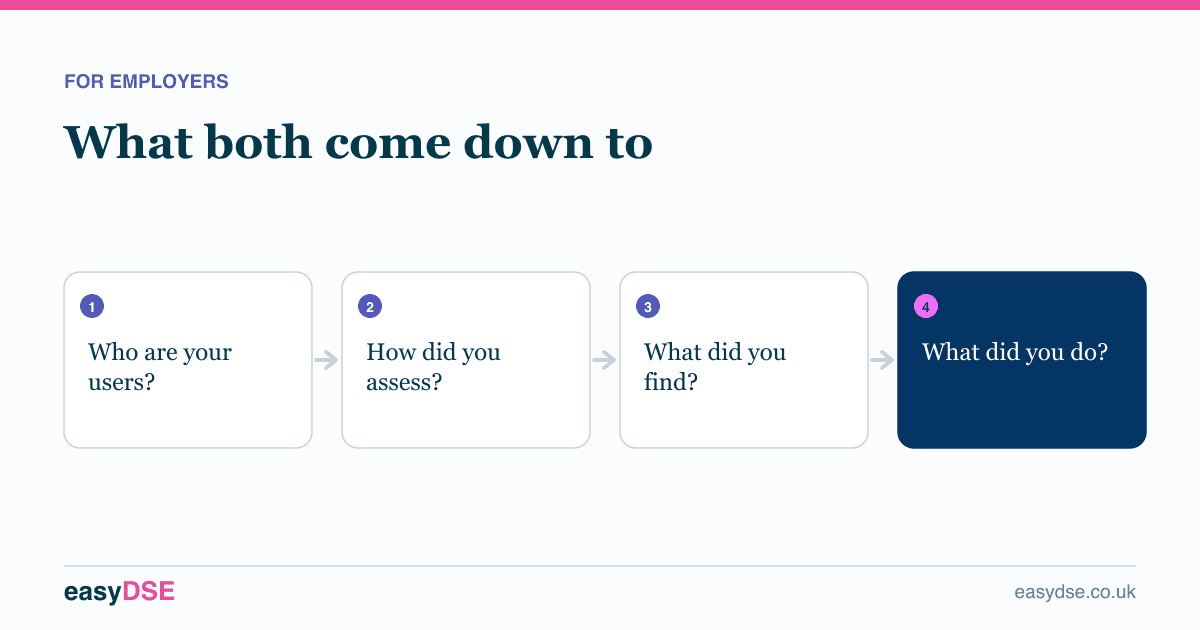
An inspector asks who your DSE users are, how you assessed them, and what you did about the findings. A claim turns on the same documents. Musculoskeletal disorders remain one of the largest categories of work-related ill health in Great Britain.
Most small employers never meet an HSE inspector and never see a claim. The ones who do usually find that both conversations reduce to the same four questions, and that the answers are decided long before anyone asks them.
Why DSE features at all
Musculoskeletal disorders have for years been one of the largest categories of work-related ill health in Great Britain, alongside stress, depression and anxiety. Back, neck and upper limb problems make up the bulk of it, and screen work is a significant contributor.
What an inspector asks
DSE is rarely the reason for a visit. It comes up during one. The questions are predictable:
- Who in your business uses display screen equipment as a significant part of their work?
- How have you assessed their workstations?
- What did the assessments find?
- What did you do about it, and when?
- What training and information have your users had?
- How do people request an eye test?
Answering the first four from a folder takes five minutes. Answering them from memory takes a lot longer and lands considerably worse.
What enforcement looks like
For DSE the realistic outcomes are informal advice, or an improvement notice requiring you to put something right within a stated period. Prosecution for DSE alone is rare, and usually indicates a broader failure.
Note that where an inspector finds a material breach, the Fee for Intervention scheme allows HSE to recover its costs from the business at an hourly rate. That is the more likely financial consequence for a small employer.
What a claim turns on
A personal injury claim alleging a work-related upper limb disorder or back injury typically asks whether the employer identified the risk and took reasonable steps to reduce it.
Your position is decided by documents that already exist or already do not:
- the assessment, showing you looked
- the findings, showing what you knew
- the action log, showing what you did and when
- the equipment record, showing what you provided
- the training record, showing what they were told
The limitation point
A personal injury claim is generally brought within three years of the date of knowledge, which can be considerably later than the exposure. This is why six years is the common retention period for DSE records, and why deleting them when someone leaves is a mistake.
What good looks like
A named list of users. An assessment for each, dated within the last year. A short action log against the significant findings. A note of equipment issued. Evidence people were told about eye tests and breaks. That set of documents answers both the inspector and the claim.
Frequently asked questions
Can the HSE fine you for DSE breaches?
Where an inspector identifies a material breach, HSE can recover its costs under the Fee for Intervention scheme, and can serve an improvement notice. Prosecution for DSE alone is rare.
How far back can an employee claim for a work-related injury?
Personal injury claims are generally brought within three years of the date of knowledge, which can fall well after the exposure itself. That is why most employers keep DSE records for six years.
Assess your own workstation, free
Eight minutes online, with a report you can act on.
Read next
This article is general information about UK health and safety law, not legal advice. Check the current position on the HSE website and take advice where the stakes justify it.