DSE record keeping: what to keep, for how long, and why
· 6 min read
The short answer
Keep the completed assessment, the findings, what you did about them with dates, and evidence of training and eye test offers. Most employers hold DSE records for six years to cover the personal injury limitation period.
The regulations do not prescribe a retention period or a record format. That is not the same as saying records do not matter. When a DSE issue turns into a dispute, the record is the entire case.
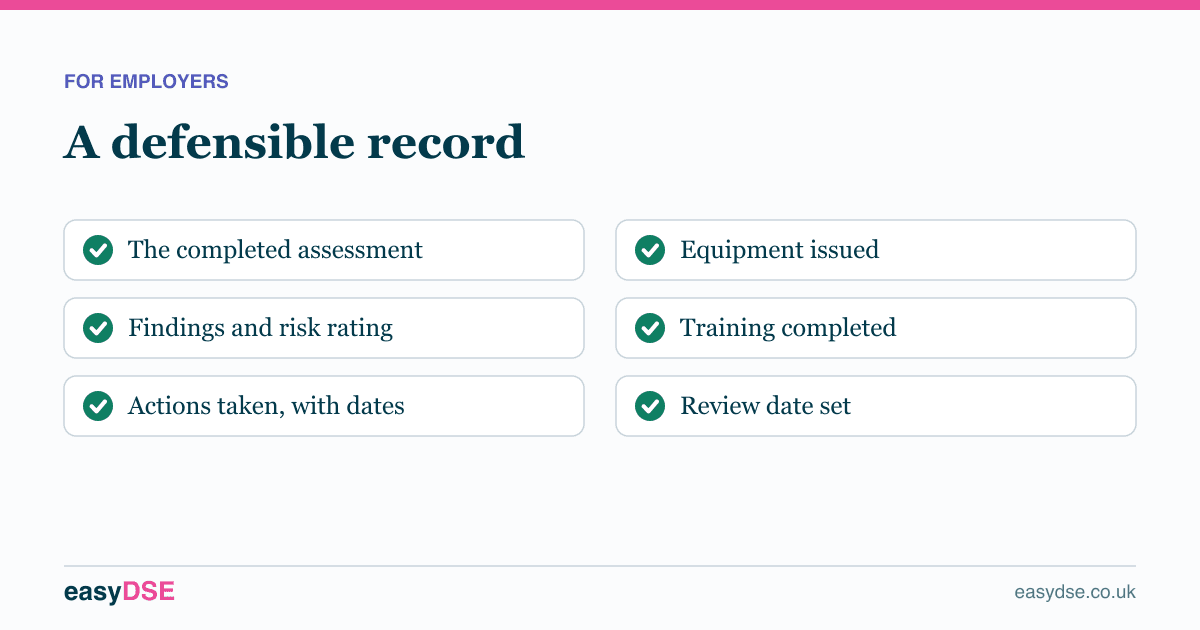
What a defensible record contains
- The assessment itself
- The answers given, dated, attributable to a named person. Not a summary.
- The findings
- What the assessment identified, ideally with a severity or priority against each.
- What you did
- The action taken against each significant finding, with a date. This is the part that matters most.
- Equipment issued
- What was provided and when, which also doubles as your asset record.
- Training and information
- Evidence people were told about the risks, their eye test entitlement and break arrangements.
- The review date
- When it will next be looked at, so the record does not silently age out.
How long to keep it
Six years is the common practice, and the reasoning is sound. The limitation period for a personal injury claim is generally three years from the date of knowledge, and date of knowledge can fall well after the exposure. Six years gives sensible headroom and aligns with other business record retention.
Data protection, because it is health data
DSE assessments routinely capture information about aches, pains, conditions, disabilities and pregnancy. That is special category data under Article 9 of the UK GDPR, and it needs handling accordingly.
- Limit access to the people who need it to act, normally the line manager and whoever handles health and safety.
- Be clear with employees, before they start, that their completed assessment will be visible to administrators.
- Do not copy health details into general HR systems or email threads.
- Set a retention period and actually apply it, rather than keeping everything forever by default.
- Record your lawful basis. For most employers this is the employment law obligation under Article 9(2)(b).
What happens when you cannot produce one
Two scenarios, both realistic for a small business.
An HSE inspection. The inspector asks how you assess DSE workstations. Without records the conversation moves quickly from a discussion to an improvement notice.
A claim. An employee alleges their working conditions caused a musculoskeletal injury. Your defence rests on showing you assessed the risk and acted on it. Without a record, you are asking a court to accept that you did something you cannot evidence.
Keeping it manageable
For a small business, a folder per person containing the assessment PDF and a one-line action log is enough. What matters is that it is complete, dated and retrievable, not that it is sophisticated.
Frequently asked questions
How long should DSE assessment records be kept?
There is no prescribed period. Most employers keep them for six years, which covers the usual limitation period for a personal injury claim with headroom.
Are DSE records covered by UK GDPR?
Yes, and the health information in them is special category data under Article 9. Limit access, set a retention period and tell employees who can see their report.
Assess your own workstation, free
Eight minutes online, with a report you can act on.
Read next
This article is general information about UK health and safety law, not legal advice. Check the current position on the HSE website and take advice where the stakes justify it.